Resources in Assassin’s Creed Shadows come mainly from smuggling: you tag large stockpiles in castles and camps, a scout hauls each one away over the season, and everything lands at your Hideout when the season changes. Small bundles you loot by hand, contracts, dismantling, end-of-season rewards and merchants fill the gaps. Below we cover the two resource types, how smuggling works, every other source, what the patches since launch changed, and a spending order that pays for itself.
Two Economies: Hideout Resources and Crafting Materials
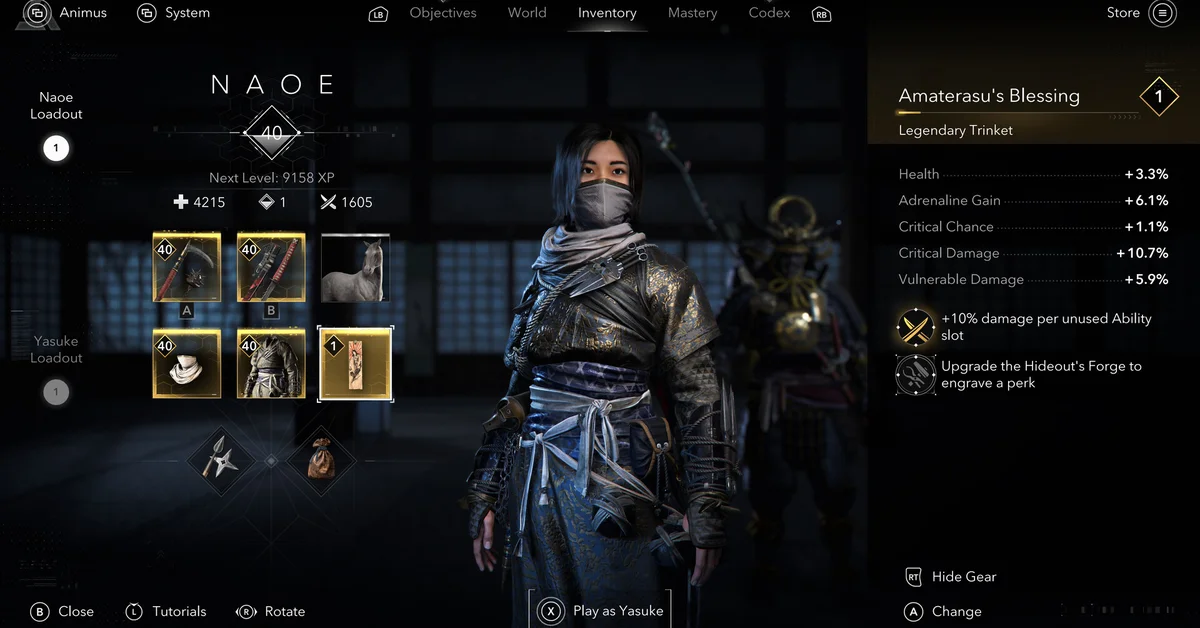
Per Ubisoft’s Hideout deep dive, buildings and upgrades cost three Hideout resources, wood, minerals and crops, plus mon. Gear upgrades at the Forge use a separate pool of crafting materials plus mon (patch notes name Gold as one; community guides list others such as Oakwood). Both are listed under Inventory, on the Bag tile.
The distinction matters because the sources overlap but are not identical. Smuggling is built for Hideout resources; dismantling is built for crafting materials.
Smuggling Is the System
Scouts unlock through the main story and the Kakurega building. Then, when you find a stockpile in a castle or a location with wealth, hold Smuggle Resources to assign a scout to it. Per the developer, each stockpile occupies one scout for the whole season, and all flagged stockpiles are cashed in when the season ends.
The Hideout buildings that shape this:
- Stables unlock smuggling in the first place, and per Ubisoft’s help pages, upgrading them reduces the cost of smuggling. Since Title Update 1.1.4, a level 4 Stable also gives each stockpile a 30% chance to return Gold, a crafting material.
- Study raises your maximum number of scouts.
- Nando makes recalling used scouts cheaper, at the Hideout and at every Kakurega.
Community guides also say high Hideout levels (level 10 is the most cited figure) make smuggled stockpiles return crafting materials on top of Hideout resources. Ubisoft has not confirmed that threshold, so treat it as a player report. Title Update 1.1.4 fixed the end-of-season screen showing different smuggled totals than you actually received, so the summary is reliable now.
Every Other Source
- Hand-looted bundles. Small resource bundles in the open world go straight into your bag. Useful, but they do not scale.
- End-of-season chest. Title Update 1.0.7 rebalanced it and increased the crafting materials and Hideout resources it gives.
- Dismantling. The Forge breaks unwanted gear into raw materials, and Title Update 1.0.7 increased how much dismantling returns. Spare bows and Teppos are a known Oakwood source.
- Contracts. Picked up from Kakurega contract boards. Title Update 1.0.5 raised the mon they pay.
- Merchants. Some merchants specialize in resources. The same 1.0.5 update raised merchant prices on Hideout resources and crafting materials and cut how much each merchant stocks per season, deliberately nudging players toward earning them in the world.
- Corrupted Castles. Added in Title Update 1.1.4: from level 30, after clearing at least three castles, up to five previously completed castles turn corrupted each season, and their chests award gear and Gold.
- The Exchange. Since Title Update 1.1.7, the Animus Exchange sells Gold, Mastery Points and Knowledge Points in daily offers bought with Keys.
Seasons Set the Rhythm
A season change is payday: scouts come home, smuggled stockpiles are delivered, and the end-of-season chest pays out. You can also spend mon at a Kakurega to bring scouts back early for another deployment. Contracts refresh when a season passes, and since 1.1.4 that holds on Awaji and in Japan alike.
The habit that matters is tagging stockpiles as you find them rather than planning to come back, since an untagged stockpile earns nothing when the season turns. Our seasons guide covers how to move the calendar forward.
Spending Order That Works
Everything competes for the same wood, minerals and crops, so buildings that pay for themselves go first:
- The Stable, because cheaper smuggling improves every later season.
- The Study, because more scouts means more stockpiles per season, plus sharper quest search zones.
- The Forge, for gear upgrades, then the Dojo if you use allies.
Since Title Update 1.1.1, each unique building has two extra upgrade levels and the Hideout has three extra levels, with bonuses that speed Hideout growth and make Gold more accessible. The resource sink is much deeper than it was in spring 2025, so an efficient smuggling setup matters long after the credits.
Tips Most Players Miss
- Tag stockpiles while scouts are free. An untagged stockpile earns nothing when the season turns.
- Dismantle before selling when a crafting material is your bottleneck.
- Buy only the last stretch. After 1.0.5, merchants are a top-up, not a supply.
Scouts are the currency underneath all of this, so raising your scout cap raises your resource ceiling too. Our full Assassin’s Creed Shadows guides cover the rest.
Frequently Asked Questions
What is the best way to farm resources in AC Shadows? Tag every stockpile for smuggling, upgrade the Stable to cut smuggling costs, and grow your scout count with the Study.
When do smuggled resources arrive? At the end of the season. Each stockpile ties up one scout until then.
What is the difference between Hideout resources and crafting materials? Wood, minerals and crops build and upgrade Hideout buildings. Crafting materials such as Oakwood and Gold upgrade gear at the Forge.
Should I buy resources from merchants? Only for small shortfalls. Title Update 1.0.5 raised merchant prices and limited stock per season.
How do I get more Gold? A level 4 Stable gives stockpiles a 30% Gold chance, Corrupted Castle chests award it, and the Exchange sells it for Keys.