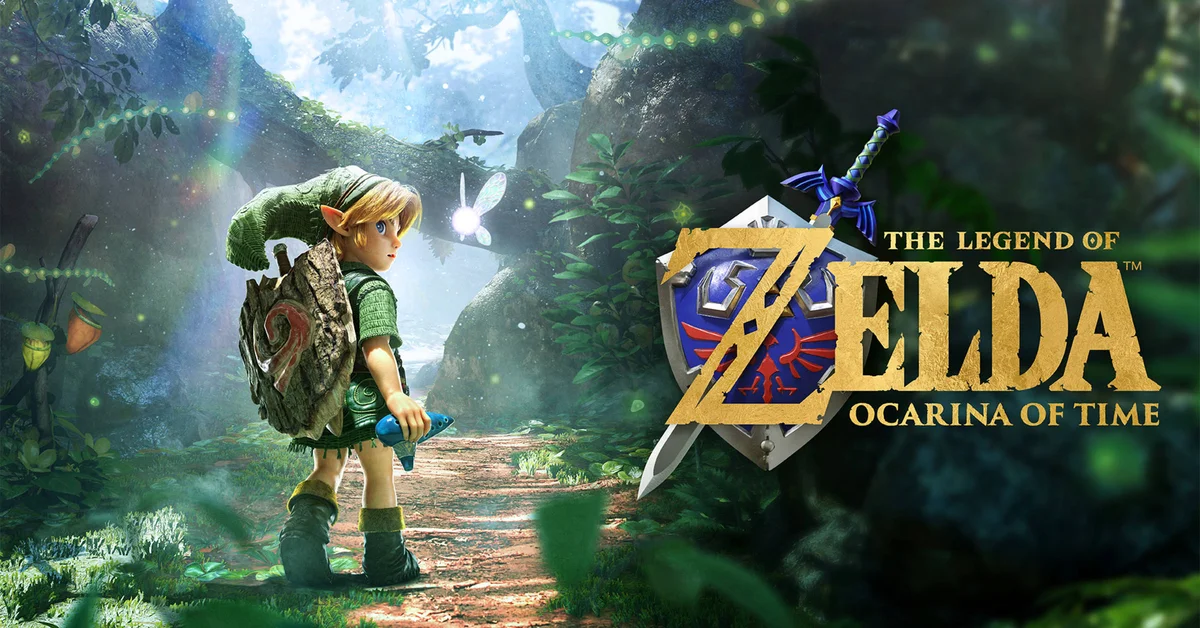
The single biggest change in the Ocarina of Time remake is a free camera. Full right-stick control, which neither the 1998 original nor the 3DS version had. Almost everything else on this list follows from Nintendo rebuilding the game for a controller with two sticks.
Movement and Controls
A dedicated jump button. Link jumps on command rather than automatically hopping at ledges, and can jump while climbing.
Roll into a dash. Hold the roll input and Link keeps running, with no stamina meter limiting it. Dashing while swimming works too, and swimming is faster generally.
Real-time item swapping. Items equip to ZR through a pop-up quick-swap menu, described as working like Breath of the Wild. Anyone who remembers pausing every thirty seconds to change boots will understand why this matters.
Optional motion aiming for the slingshot, bow and similar, with lock-on still available for snap aiming.
Z-targeting itself is preserved. The combat structure is the one thing Nintendo has not modernised, and that is deliberate.
Presentation
Nintendo’s own copy promises completely overhauled visuals with rebuilt textures and materials, fully voiced cutscenes with expanded and new character dialogue, and a symphonic orchestral soundtrack. Zelda and Ganondorf are among the characters shown speaking.
The World
Hyrule Castle Town is fully explorable in 3D, rather than the limited space the original allowed, with the free camera available in town and quests that reward helping residents.
A continuous day and night cycle runs everywhere, including towns, changing which NPCs and enemies appear. In the original this was far more restricted.
Threads of Time is new: a quest log, objective tracker and story recap presented as an updating tapestry. Navi still exists and still flags enemy weaknesses.
The Change Nintendo Chose Not To Make
Some transitions are now seamless, including shops and certain areas. But Aonuma deliberately kept the loading transitions between major areas, even though the Switch 2 does not need them, because they are part of how the original is structured and paced.
That decision tells you what this remake is. Aonuma called it “a faithful interpretation using modern technologies.” Nintendo is preserving the shape of the game and modernising the friction around it, not reimagining it.
What Is Trailer Analysis, Not Confirmation
Reports of a bombable floor on the route to the Deku Tree, altered dungeon layouts and enemies moved from their original positions come from frame-by-frame breakdowns of the trailer rather than from Nintendo. They are reasonable readings, and they support the idea that this is a rebuild rather than a room-for-room copy, but they are press analysis.
No hands-on previews exist yet. Everything above comes from the Direct, the trailer and Nintendo’s store listings, so treat anything more specific with suspicion until press get to play it. Our guide on whether this is based on the 3DS version covers what has and has not been said about the older remake’s changes.
Frequently Asked Questions
Does the Ocarina of Time remake have a free camera?
Yes. Full right-stick camera control, which neither the N64 nor 3DS versions had.
Can Link jump in the remake?
Yes, on a dedicated button, including while climbing, rather than automatically hopping at ledges.
Is the game fully voiced?
Cutscenes are fully voiced with expanded dialogue, and the soundtrack has been re-recorded symphonically.
Are the loading transitions gone?
Some are, such as shops, but Aonuma deliberately kept transitions between major areas to preserve the original’s structure.