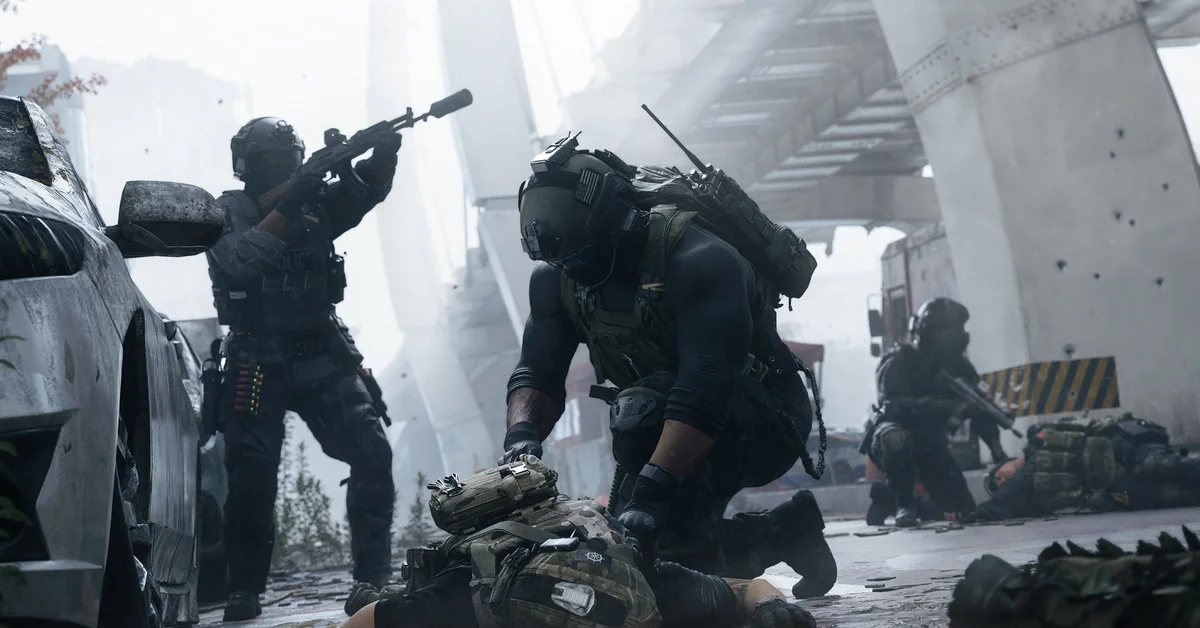
The best DMZ Traits in Call of Duty: Modern Warfare 4, in our view, are Possum and Viper Sense from the Warfighter tree and Free Revive from the Survivalist tree, because they keep your Operator alive, and a dead Operator is what costs you gear and DMZ Cash. If you mostly loot, Scout’s Investor and Container Looter pay back fastest, and in a squad one player with Faster Revive and Numb the Pain makes everyone harder to kill.
Choose carefully: every Trait you pick is locked in for good, and each Operator only ever earns 18 Trait Points before it maxes out. The Trait descriptions below come from Activision’s Forward Operating Base guide, the second part of its official DMZ deep dive. The rankings are ours. Activision has not published a list of every Trait, so we cover the ones it has named, then explain how the trees work, which builds we would run, and how Permanent Prestige Traits change things.
How DMZ Traits Work
Traits belong to each Operator, not to your account. Every Operator wears a Dog Tag that levels up through 18 tiers, from Steel I to Onyx III, as that Operator earns DMZ XP. Each new Dog Tag level gives one Trait Point, and Activision says a strong deployment can level the Dog Tag more than once. The points arrive after you exfil, so extracting matters.
You spend points from the Operators station or the Traits menu on three trees: Warfighter, Scout and Survivalist. There are 66 Traits in all, 22 per tree:
- Six Main Traits per tree, always visible.
- Sixteen Minor Traits per tree, randomized, and only shown once you unlock the Main Trait below them.
Each tree works as a ladder of branches. Your first point in a tree buys a random Minor Trait. After that, branches offer either two Main Traits or three Minor Traits, and you take one Trait per branch to open the next. A full tree is nine Traits, so 18 points is enough to complete two trees or to spread across all three.
Three rules make every point count:
- No respecs. Once you pick a Trait, it cannot be swapped.
- Traits raise your rescue bill. If your Operator goes Missing in Action, recovering them costs DMZ Cash, and Activision says the cost rises with their Trait Points. Recovered Operators keep their Traits but return without their gear.
- Main Traits come in pairs. Activision has not published which Main Traits share a branch, so check the pairs in the Traits menu before you plan a build. If two of our picks below sit in the same branch, you can only take one of them.
Activision named seven Traits from each tree: the six Main Traits plus the random Minor Trait its own Operator rolled first, without saying which one was the Minor. One Trait in each list below may therefore not show up for you, or may show up later as one of the randomized Minor picks.
The Best Warfighter Traits
Warfighter is the combat tree. Activision’s descriptions, and our ranking:
- Possum: a Self Revive into Last Stand from death, restoring health to maximum, once per match. Our top pick in the whole game. A second life every deployment protects everything in your backpack.
- Viper Sense: conceals you from thermal optics and AI targeting systems. Most of the fighting in DMZ is against AI soldiers, so staying off their targeting is constant value.
- Quick Fix: reduces the health regeneration delay when you kill an enemy Operator or hostile. Strong for players who take a lot of fights.
- Adrenaline Burst: killing an enemy resets your tactical sprint. Good for pushing or escaping after a kill.
- Equipment Professional: slowly recharges your equipped Lethals and Tacticals after use. Handy early, when you have few grenades to bring in.
- Combat Resistance: reduces damage from explosives and the effects of enemy Tacticals. More useful the more you fight rival squads.
- Adaptive Restock: enemy hostiles drop one additional item.
The Best Scout Traits
Scout is the looting and intel tree, and the one that grows your bank fastest.
- Investor: slightly increases the cash amount you extract. DMZ Cash pays for Operator rescues, upgrades and Operator Prestige, so this pays off on every successful run.
- Container Looter: a chance at an extra piece of loot in containers. Pairs well with Investor on a looting Operator.
- Thermal Padding: hides you from UAVs and downgrades Advanced UAVs to UAV detection. The best Scout pick if rival squads keep finding you.
- Hostile Looter: enemy hostiles sometimes drop an Uncommon printer ingredient, with a very small chance of a Rare one. Useful once 3D Printer crafting becomes your bottleneck.
- Field Crafting: lets you craft items directly from Common printer resources while deployed.
- UAV Upgrade: increases the range and duration of UAVs and upgrades them to Advanced UAVs.
- Overwatch: UAV towers you activate never expire.
The Best Survivalist Traits
Survivalist is the staying-alive tree, and the best partner for Warfighter.
- Free Revive: automatically repairs your first Wound. Being Wounded is the state DMZ puts you in after you get back up, and fixing it otherwise takes a Medkit.
- Die Hard: approaching an exfil while in Last Stand calls the exfil automatically, and you get infinite bleed-out time in Last Stand. On paper, paired with Possum’s trip into Last Stand, it gives a dying Operator a real chance to crawl out with their loot.
- Faster Revive: increases revive speed. The squad pick.
- Numb the Pain: applies Painkillers and Smelling Salts effects when you are revived. Another squad pick.
- Consumable Duration: consumables last longer.
- Impact Smokes: releases smoke when you are downed, giving teammates cover to reach you.
- Air Superiority: extends the duration of UAV towers and SAM sites.
Activision says some Traits also help with vehicles, such as hopping out to repair a punctured tire, though it has not named them yet.
Our Builds: Which Trees to Max
These builds are our suggestions, assuming the Main Traits they rely on sit in different branches on your Operator.
- Solo survivor (Warfighter plus Survivalist): Possum, Viper Sense and Quick Fix, then Free Revive and Die Hard. Built to survive mistakes and still make it to exfil with your backpack.
- Squad medic (Survivalist plus Warfighter): Faster Revive, Numb the Pain and Impact Smokes, with Possum as your own insurance. Squad Fill drops you in with two other players if you have no friends online, so a revive kit pays off even with strangers.
- Looter (Scout plus Survivalist): Investor, Container Looter and Thermal Padding, then Free Revive. Activision points out that DMZ Cash, resources and printer ingredients are shared by all your Active Duty Operators, so one Operator built for looting can fund the rest of your roster.
That last point is why your Active Duty slots matter. Everyone starts with two Operator slots and Vault Edition owners get a third, as our DMZ early access guide explains, and each Operator keeps its own Traits. Running a combat Operator and a looting Operator side by side is a fair way to use them.
Permanent Prestige Traits
Once an Operator has earned all 18 Trait Points, you can Prestige that Operator. It is separate from the main player Prestige covered in our Modern Warfare 4 Prestige guide. Activision lists the costs:
| Operator Prestige | Gear you hand over | DMZ Cash |
|---|---|---|
| First | Two weapons with three Attachment slots, plus a Rare Plate Carrier, Rare Backpack and four Rare printer ingredients | 200,000 |
| Second | Two weapons with four Attachment slots, plus an Epic Plate Carrier, Epic Backpack and four Epic printer ingredients | 300,000 |
| Third and later | Two weapons with four Attachment slots, plus a Legendary Plate Carrier, Legendary Backpack and four Legendary printer ingredients | 500,000 |
Prestiging removes and resets all of that Operator’s Traits, and in return it grants one random Permanent Prestige Trait from the Trait pool. That Trait stays with the Operator even if you dismiss them, move them to another Active Duty slot or change their skin. An Operator can hold up to three Permanent Prestige Traits. From the fourth Prestige on, each new one is offered as a swap: replace one of your three, or turn the new one down. Then you earn your 18 points again, which makes a Prestige the only way to rebuild an Operator’s Traits.
Tips Before You Spend a Point
- Spend points as you earn them. Unspent points do nothing in a deployment, and Activision recommends spending them before an Operator Prestige.
- Plan two trees, not three. Nine Traits finish a tree, and the deepest branches are only reached by committing. Spreading 18 points across three trees leaves you with only the early Traits in each.
- Do not overvalue UAV Traits solo. UAV Upgrade, Overwatch and Air Superiority shine when a squad is moving together. Alone, Viper Sense and Thermal Padding do more to keep you hidden.
- Keep a cheap Operator for risky runs. Rescue costs climb with Traits, so a fresh Operator is the one to send after a Lieutenant or into the reactor zone.
New to the mode? Start with our DMZ beginner guide, and see our DMZ early access story for what opened before launch. Our DMZ mode explainer covers the base, the bosses and the 70-level track, and every guide is on our Call of Duty hub.
Frequently Asked Questions
How many Traits are in Modern Warfare 4 DMZ? Activision says there are 66 Traits, 22 in each of the three trees: Warfighter, Scout and Survivalist.
How many Traits can one Operator have? An Operator earns up to 18 Trait Points, one per Dog Tag level from Steel I to Onyx III, which is enough to complete two trees. Operator Prestige can add up to three Permanent Prestige Traits on top.
Can you reset or respec Traits in DMZ? Not directly. Activision says a Trait cannot be swapped once picked. The only reset is an Operator Prestige, which clears that Operator’s Traits so you can earn and spend 18 points again.
What happens to your Traits if your Operator dies? The Operator goes Missing in Action. You can pay DMZ Cash at the Operators station to recover them with all their Traits, but without their gear, or dismiss them and start a new Operator.
Which DMZ Trait tree is best? For most players we would complete Warfighter and Survivalist first, for Possum, Viper Sense and Free Revive. Scout is the best second tree for players who mainly loot.