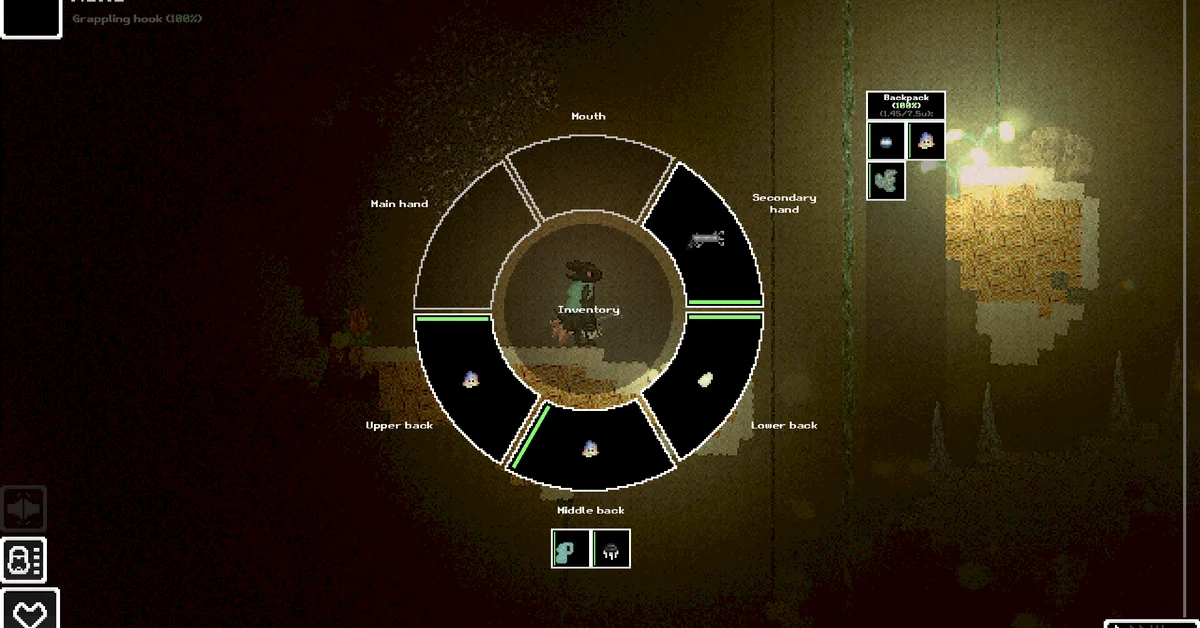
The best container in Casualties: Unknown is the backpack: it is the biggest container you can wear, it sits on your back so your hands stay free, and it holds several times what the early bags do. For liquids, the best container is the IV bag, which carries the most fluid for its weight, though you need a different container to scoop water up off the ground.
How much you can carry decides how long you survive in Casualties: Unknown, because your experiment only has a few body slots and every item has weight. This guide covers the best container for gear, the best for liquids, what to use in the early layers before you have either, and how to wear several containers at once.
The Best Containers at a Glance
| Need | Best pick | Why |
|---|---|---|
| Overall storage | Backpack | Largest wearable container, worn on your back |
| Early game | Foliage bags, then a sling bag | Cheap to craft from what the first layer gives you |
| Crafting materials | Material pouch | Built to hold crafting materials, with no small weight cap since 1.0 |
| Tools | Belt | Keeps tools at hand without using a bag |
| Liquids, carried | IV bag | Most fluid for the least weight |
| Liquids, gathered | Milk carton or chocolate milk bottle | Fills itself from water on the ground |
Why the Backpack Is the Best Container
The backpack is the one container worth going out of your way for. In the game’s own inventory screen, a full-condition backpack shows 7.5 units of capacity, which is more than any other container you can wear.
It also goes in the back slot, which leaves your hands, your mouth and your other worn slots free. Putting items into a container makes them easier to carry as well, because a container takes some of their weight off you. Hold Shift over a container to see exactly how much it reduces encumbrance.
How to get one:
- Find it. Backpacks turn up in drop capsules, so open every capsule you pass.
- Craft it. The backpack is a craftable item, but it sits well up the intelligence ladder, so expect to read a fair few E-PDAs and blueprints first.
Finding a backpack early makes the smaller back-slot bags pointless, so if you get one in the first layers, swap out whatever you were wearing on your back and sell or drop the old bag.
The Best Early Containers
You start with almost nothing, so the first containers come from crafting:
- Foliage bags. Made from the foliage you collect from plants in the first layer, and cheap enough to make two or three. They have the rippable quality, which means a crafting recipe can turn one into a ripped dressing by accident, so press F to favorite them.
- Sling bag. An early craftable bag for your back. It holds less than a backpack but frees up your hands once you have it.
- Material pouch. Holds crafting materials such as scrap metal, wood scraps and rope. The 1.0 patch notes changed it to accept only specific material items, but removed its small weight limit, so it is now the place for your whole stack of crafting supplies.
- Belt. Keeps your tools, like a digging tool or a wrench, out of your bags.
If you are collecting scrap metal, melt spare pieces down into scrap cubes before packing them away, because cubes weigh less than the loose metal.
The Best Liquid Containers
Liquids need their own containers, and the choice is different from gear:
- IV bag. The best liquid storage in the game for its weight. Craft a few and keep each one for a different liquid, such as clean water, soup or bio-chem fluid. The catch: an IV bag does not fill itself from water on the ground.
- Milk carton or chocolate milk bottle. Drop one into a pool of groundwater and it fills itself, which makes it the right tool for gathering. Then transfer the water into your IV bags.
- Canteen. One of the first things you can craft. It holds less, but it refills itself when it touches water, and it is a fine first bottle.
- Water jug. Holds a lot of clean water and comes with water in it, but it is heavy, so it is often better drunk on the spot than hauled down a layer.
- Liquid pouch. A wearable liquid container, but heavy for what it holds. IV bags packed into a bag or pouch carry the same water for less weight.
Water you gather from the caves is not always safe to drink. Our guides to boiling water and eating in Casualties: Unknown cover how to keep your supplies from making you sick.
Containers to Treat With Care
- Grav-Bag. The game describes it as an experimental container that uses negative gravity to cut the weight of what is inside, and warns that it “has explosive tendencies when its battery nears empty”. It is powerful while charged, but keep an eye on its battery and never let it run down while you are holding it.
- Any rippable bag. Favorite it so you do not cut it up for bandages in a hurry.
Every container shows a condition percentage next to its name, like other items. Check it now and then, because a worn-out bag is a bad surprise halfway down a layer. Everything you carry also comes with you when you save at the bottom of a layer, and our guide to saving in Casualties: Unknown explains how that works.
Frequently Asked Questions
What is the best backpack in Casualties: Unknown? The backpack itself. It has the biggest capacity of any wearable container, and once you have one, the sling bag and the other back-slot bags are not worth wearing.
What is the best liquid container? The IV bag, because it holds the most liquid for its weight. Use a milk carton or chocolate milk bottle to collect water first, since an IV bag will not fill from the ground.
Can you wear more than one container? Yes. Worn containers use different body slots, so you can wear a back container, a belt and pouches at the same time, and carry bags in your inventory too.
Is the liquid pouch worth it? Usually not. It is heavy for the amount it holds, and IV bags packed into another container carry a similar amount for less weight.
Where do you find a backpack? In drop capsules, or you can craft one once your intelligence is high enough.