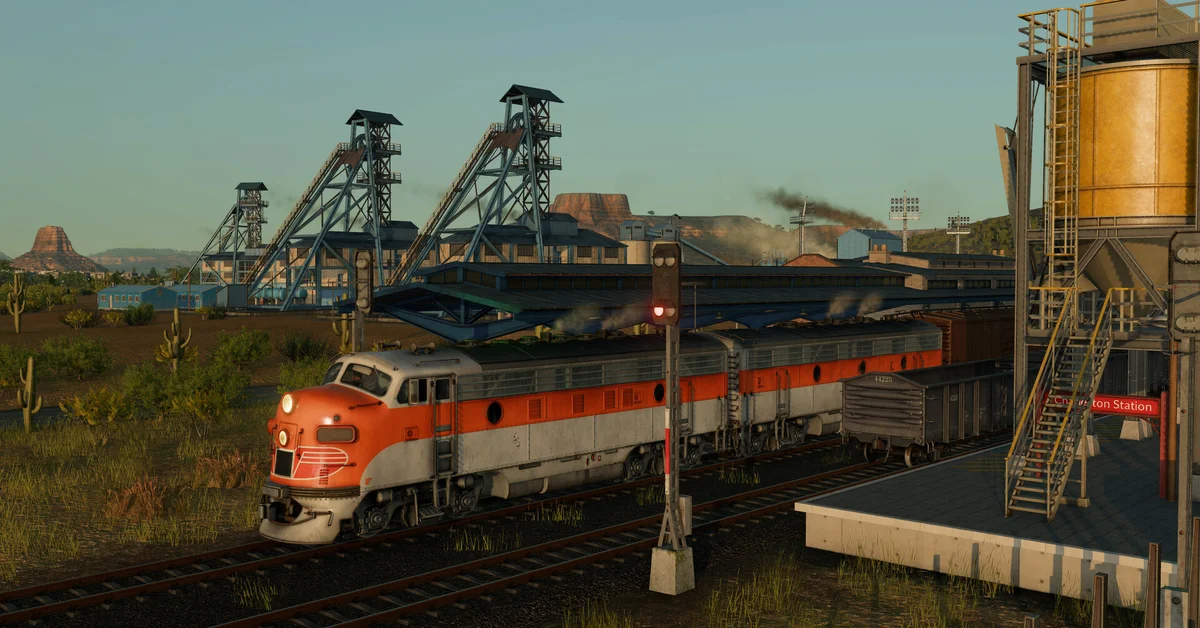
Transport Fever 3 has more than 300 vehicles in the base game, per developer Urban Games, spread across trains, trams, buses, trucks, ships, planes and helicopters, and covering the years from 1900 to 2030 and beyond. Helicopters and cargo trams are new to the series.
Below we cover every vehicle type, how the official count has changed, the eras the game spans, the individual models Urban Games has named, and what is not in the base game. Urban Games has not published a full model-by-model list before launch, so this guide sticks to what the studio and store pages confirm for the launch release on September 29, 2026; we will add the full roster once the game is out.
Every Vehicle Type
Urban Games’ vehicle trailer post lists the familiar modes (buses, trucks, trains, aircraft, ships and passenger trams) and says helicopters and cargo trams “make their debut for the first time.” The Collector’s Edition card game splits the roster into eight families, which we use here:
| Type | What is confirmed |
|---|---|
| Locomotives | Steam trains at the start, later electric locomotives such as the El 18; tilting trains exist |
| Multiple units | Up to modern high-speed trains, including the TGV |
| Trams | Passenger trams, new cargo trams, and overland trams for light rail |
| Buses | Part of the base roster; no trolleybuses |
| Trucks | Part of the base roster for road freight |
| Ships | From paddle-steamers to supertankers |
| Planes | Up to modern jet planes |
| Helicopters | New to the series, for passengers and freight |
Road transport also starts with horse-drawn wagons, per the store description, which runs “from humble beginnings with horse-drawn wagons, steam trains, and paddle-steamers” to “the latest jet planes, supertankers, high-speed trains, and helicopters.”
A few details from Urban Games’ replies to players on the official site:
- Helicopters carry both passengers and freight, and the studio says airports have “some extra modularity” to accommodate them.
- Cargo trams are aimed at urban freight delivery, per the trailer post.
- Trams and trains: none of the base game’s trains can run on tram track, but some trams can run on regular rail lines and others cannot.
- Tilting trains tilt for looks only. As of July, Urban Games said their top speed matches non-tilting trains.
- Dual-power locomotives are treated as electric trains, since a vehicle’s power source is a simple electric-or-not setting.
How Many Vehicles There Are
The official count has grown over the past year, and different pages still show different figures:
| Source | Figure |
|---|---|
| Vehicle trailer post (October 2025) | “over 270 models” |
| Steam page and official feature list | “275+ realistic vehicles” |
| First Look Episode 5 (July 2026), editions page and FAQ | “more than 300 vehicles” |
The newest statements all say 300+, so that is the figure to go by. It covers the base game only. The pre-order bonus adds one more (the TS Queen Mary ocean liner), and the Deluxe Edition adds its own set, covered below. The Collector’s Edition’s 200-page artbook is described as “showcasing every vehicle from the game,” which suggests a complete roster exists, but it has not been published online.
The Eras: 1900 to 2030 and Beyond
The official FAQ says the game covers transport technology, vehicles and city environments “starting in 1900 and running to 2030 and beyond.” The store page puts it at “more than 125 years of transport evolution.”
Urban Games explained the 1900 start in January: it is “the point where the vast majority of players started their games in Transport Fever 2,” and focusing there let the team spend more time on 20th-century vehicles and towns. Earlier years are left to modders.
What changes as the years pass:
- New vehicles arrive as the years pass, and older ones can keep running: the store page talks about running “steam trains and jets side by side.”
- The world ages with them. The store page says “buildings, people, and cars follow designs and trends through time.”
- Infrastructure upgrades, “from small country roads to highways and from old-wooden rails to modern high-speed tracks.”
You do not have to move on: Urban Games says you can control the time settings and “remain forever in one era.” The studio has not published unlock years for individual vehicles.
How Vehicles Compare
Newer is not automatically better in Transport Fever 3. Per Urban Games’ Dev Blog Episode 5, the rebuilt vehicle purchase menu rates each vehicle on loading speed, comfort, noise and pollution alongside its technical specs, and includes a comparison mode because “the latest model is not always the best choice.” The studio also told players that older vehicles “will retain their value and usefulness long after newer alternatives are released.”
Condition matters too: Urban Games says vehicle condition now affects performance, so where you place maintenance facilities becomes a real decision as your fleet grows. Per First Look Episode 4, noise and pollution are among the factors that limit town growth in Tycoon mode, so a loud, dirty vehicle can cost you even when it makes money.
Named Vehicles So Far
Urban Games has named very few base-game models before launch:
- TGV: “The TGV is an iconic part of the game so naturally it is included,” per the studio.
- El 18: Urban Games Publishing Manager Nicolas Heini said this Norwegian electric locomotive was added for the new subarctic climate zone.
The paid extras are named in full. The pre-order bonus adds the TS Queen Mary ocean liner. The Deluxe Edition lists six vehicles: the Concorde, London Bus, Trans-Europe Express, Peterbilt 359, Hong Kong Tram and Sikorsky S-76 Spirit helicopter.
What Is Not in the Base Game
- Trolleybuses: Urban Games says they and their overhead wires were left out, as buses, trams and light rail already cover that role.
- Maglev trains: “We have no plans to include Maglev trains,” though modders can add them.
- Left-hand traffic: vehicles drive on the right only, with a left-hand option expected through modding.
Urban Games has been open that no base game can cover every country’s favorites, and mods fill the gaps on every platform; our platforms guide explains how the Mod Hub works on console, our multiplayer guide covers sharing mods and saves, and the release time guide covers when you can start building. Everything else is on the Transport Fever 3 hub.
Frequently Asked Questions
How many vehicles are in Transport Fever 3? More than 300 in the base game, per Urban Games’ latest statements. Some older pages still say 270 or 275.
Does Transport Fever 3 have helicopters? Yes. Helicopters are new to the series and can carry both passengers and freight.
What year does Transport Fever 3 start? The game starts in 1900 and runs to 2030 and beyond, per the official FAQ.
Is the TGV in Transport Fever 3? Yes. Urban Games confirmed the TGV is part of the base game.
Are there trolleybuses or maglev trains? No. Urban Games left trolleybuses out and has no plans for maglev trains, though it says modders can add maglev.