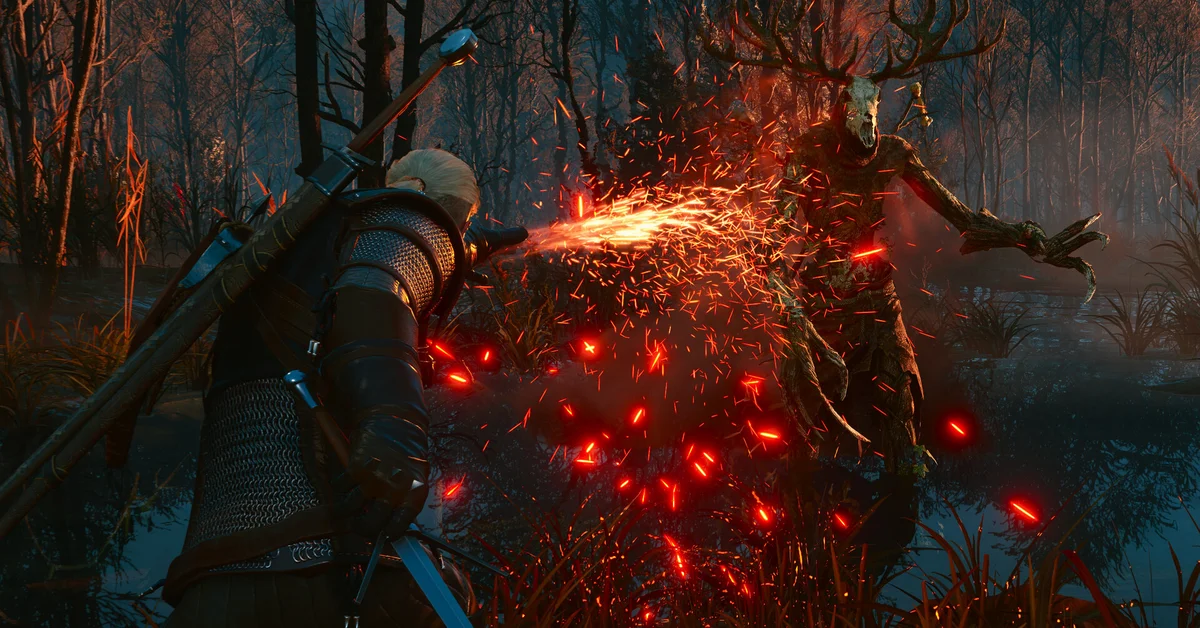
Our pick for the best early build in The Witcher 3 Remastered is a sword-and-shield hybrid: put your first points into fast-attack damage on the Combat side and the Quen line on the Signs side, then add Refreshment from Alchemy once potions become part of your routine. It keeps Geralt alive while you learn the new tree, and because CD Projekt Red rebuilt skills around three ranks and prerequisites, it leaves you a clean path into a full sword, Sign or alchemy build later.
That recommendation is our reading of the new system, not an official CD Projekt Red build. Below we explain what actually changed, why we start this way, and how to adjust it for your playstyle.
What Changed in the Remastered Skill Tree
The Witcher 3: Wild Hunt Remastered rebuilt progression. CD Projekt Red’s official change list confirms these points, and they shape every early-game decision:
- Skills sit in a real skill tree, and each skill has three ranks.
- Prerequisites replace point totals. Unlocking a new skill “now requires having the necessary prerequisite skills rather than spending a set number of skill points.”
- Values were rebalanced. CDPR refined “skill bonus values, effects and synergies.”
- Some skills were renamed “to better reflect their effects.” CDPR has not published a list of the new names.
- Old saves get a full reset of skill points, so every returning player rebuilds from scratch.
One important caveat for this guide: the skill names we use below are the original game’s names. Because CDPR renamed some skills without listing which, if a name below does not match what you see, pick the skill with the same effect in the same part of the tree.
Why Prerequisites Change Early Spending
In the original game, the deeper tiers of a tree opened once you had spent enough points anywhere in that tree, so players often dumped early points into whatever was cheapest. That no longer works. Since new skills now unlock through specific prerequisite skills, the order you take skills matters more than the total you spend.
In practice, that means two things for your first ten or so levels:
- Pick a target and walk toward it. Decide which deeper skill you want and take the prerequisites on the path to it, rather than spreading single points everywhere.
- Weigh a new rank against a new skill. With three ranks per skill, pushing one strong skill to a higher rank can be worth more than unlocking something new. Read the rank values on the skill screen before you commit.
Our Recommended Early Skills
These are the original game’s early skills we would look for first, grouped by tree:
- Combat: Muscle Memory. Boosts fast-attack damage. Fast attacks are what you use most in the opening hours, so this pays off immediately.
- Combat: Strength Training. Boosts strong-attack damage. Take it second if you prefer heavy hits against armored humans.
- Signs: the Quen line. Quen’s shield is the most forgiving defensive tool in the game, and its alternate mode, Active Shield, heals Geralt for damage it absorbs. Early on, nothing does more to stop a bad fight from ending your run.
- Signs: Firestream (Igni). Igni’s alternate mode turns the Sign into a continuous stream of fire, which is excellent against groups of drowners and nekkers.
- Signs: Delusion (Axii). Strengthens Axii and opens extra dialogue options in conversations, which can skip fights and change some quest outcomes.
- Alchemy: Refreshment. Every potion you drink restores some Vitality. It turns your Swallow and Thunderbolt habit into extra healing.
- Alchemy: Heightened Tolerance and Acquired Tolerance. Both raise how much toxicity you can carry, which lets you stack more potions per fight.
Three Early Builds to Grow Into
Once you know how you like to fight, steer the hybrid toward one of these classic directions:
- Sword build: keep investing in fast or strong attacks and their follow-up skills. Pair with the light Feline school gear if you like speed or the heavy Ursine gear if you like to trade hits.
- Sign build: push Quen and Igni deeper and invest in Sign intensity. The Griffin school gear set is built for this style.
- Alchemy build: stack toxicity and potion skills, then add decoctions and bombs later. It starts slower but scales well.
Reviewers describe the new tree as friendlier to builds than the original: GamesRadar’s review says it “feels drastically easier to make builds now,” whether you want “a sword-slinging expert or a crafty master of bombs and potions.” CDPR has not detailed how mutagens and Blood and Wine’s mutations interact with the new tree, so treat any precise late-game mutagen math you read elsewhere with caution until it is confirmed.
Tips for Your First Hours
- Collect Places of Power. In the original game each one granted a free skill point the first time, and on a fresh tree every extra point counts.
- Do not overthink the first few points. If you loaded an old save, the Remaster’s reset already gave you a clean slate, and our respec guide explains what is known about the Potion of Clearance for a later change of heart.
- Match the build to your difficulty. On higher settings, defensive Sign skills matter more. Our guide on how to change difficulty covers each option, including the new Bard’s Ballad accessibility preset.
- Fund your gear. School armor diagrams and crafting cost crowns, so see our guide to making money fast, and our transmog guide explains how to keep a look you like while wearing the stats you need.
For the full rundown of what CDPR confirmed about the new system, read our skill tree explainer and our story on the skill reset and change list. On PC, our best PC settings guide covers the graphics options, and every guide is on our Witcher 3 hub.
Frequently Asked Questions
What is the best early build in The Witcher 3 Remastered? Our pick is a hybrid of fast-attack damage and the Quen Sign line, with Refreshment added once you use potions regularly. It is our recommendation, not an official CD Projekt Red build.
Do skills still unlock by spending points in a tree? No. CD Projekt Red’s change list says unlocking a new skill now requires the necessary prerequisite skills rather than a set number of skill points.
How many ranks does each skill have? Three, according to CD Projekt Red’s official change list.
Why do some skill names look different? CDPR renamed some skills to better reflect their effects. It has not published a full list, so match skills by what they do.
Is Quen still worth taking early? In our view, yes. Its shield and its Active Shield alternate mode are the safest defensive tools for a new or reset character.
Can I change my build later? Yes. The Remaster resets skills on old saves for free, and our respec guide covers the Potion of Clearance and what CDPR has said about it.