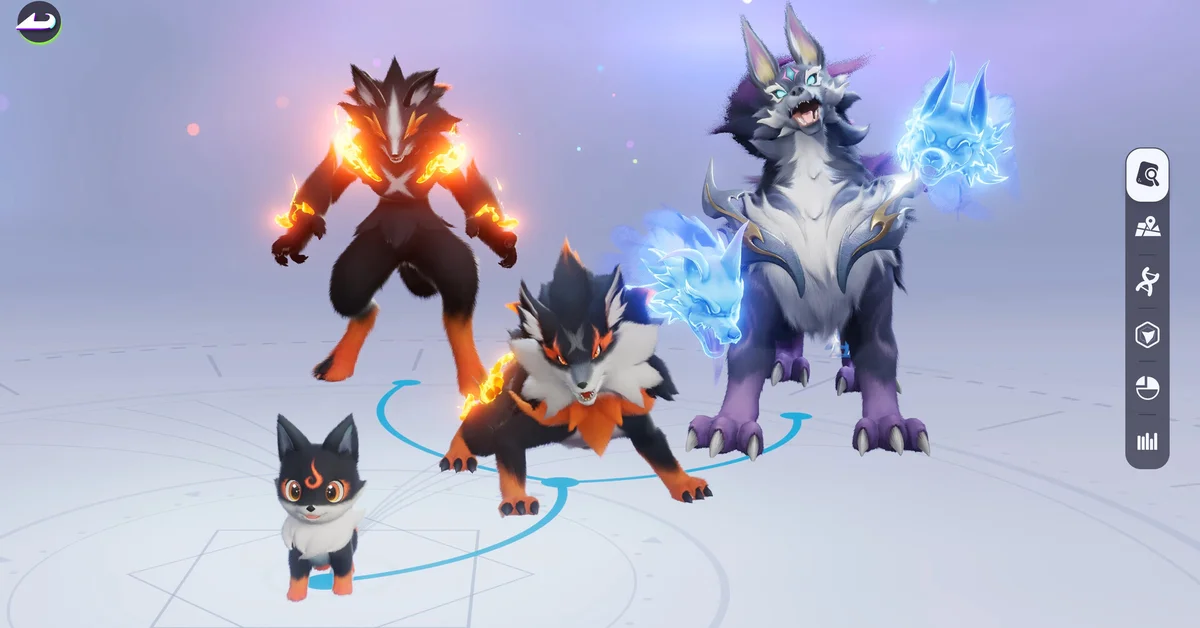
To evolve an Aniimo, you meet that species’ own evolution condition (a level, an item, a specific task, or a mix) and then confirm the evolution yourself (player guides place the Evolve button in the Aniimo Management menu). There is no single evolution level for the whole roster, and many lines branch, so the condition you meet decides which form you end up with.
This guide covers the live version of Aniimo as of the version 1.1 update of September 23, 2026. It explains the three evolution stages, how branching lines work, the kinds of conditions the developer has described, where to find the Evolve option, and what to check before you commit.
The Three Evolution Stages
Pawprint Studio’s store description says “Most Aniimo can evolve,” and the developer’s official Aniimo Wiki sorts every species into three stages: Lumin, Gamma and Nova. Lumin is the first stage and Nova the last, but not every line uses all three. Many jump straight from Lumin to Nova:
| Line (per the official wiki) | Stages |
|---|---|
| Emberpup, Flameruff, then Scorchhowl or Inferlupa | Lumin, Gamma, Nova |
| Susuta, Popota, then Panpanta or Piopiota | Lumin, Gamma, Nova |
| Bonesky, Fenrier, Glynsera | Lumin, Gamma, Nova |
| Chirpi, then Tromber, Cornet or Tubster | Lumin, Nova |
| Nimbi, then Dreaple or Turbo | Lumin, Nova |
| Squarrel, Squashel | Lumin, Nova |
Stage matters for catching as well as fighting. The official Probability Details page sets a Nova-stage Aniimo’s base catch chance at exactly half a Lumin-stage one in every area band (28% against 56% in early-game areas, 16% against 32% in late-game areas). Catching an easy first-stage Aniimo and evolving it is often the gentler route to a final form.
How Branching Evolutions Work
Many lines split, and the branches are not cosmetic. The official wiki lists different elements and combat roles for each:
- Chirpi (wind, Support) becomes Tromber (wind, Support), Cornet (wind, DPS) or Tubster (wind, BREAK).
- Flameruff (fire, DPS) becomes Scorchhowl (fire, DPS) or Inferlupa (fire and dark, BREAK).
- Popota (water, BREAK) becomes Panpanta (water, BREAK) or Piopiota (water, Support).
Each branch has its own condition. During the closed beta, Pawprint’s patch notes changed Piopiota’s requirement to “approaching and successfully bonding with Susuta until it turns red and follows you,” which shows how specific a branch condition can be. Decide which role you want before you meet a condition, because the choice sets your Aniimo’s element and role.
The Kinds of Evolution Conditions
Pawprint has not published a full condition list, but its patch notes describe every major type:
- Level thresholds. A beta patch made Glynsera’s evolution unlock automatically once Fenrier reaches a set level, “allowing you to choose whether to evolve.” Evolution is an option you confirm, not something forced on you.
- Items. The launch patch notes “Changed the type of item consumed to evolve Squarrel,” confirming evolutions can cost items. In the second closed beta, those items were Dewdrop Crystals: family-specific crystals synthesized from semi-finished ones using Primegy.
- Tasks and locations. A beta patch rewrote the requirement text “using clearer and more consistent wording” and added coordinate tracking for “evolution tasks that require traveling to specific locations.”
Player guides describe more condition types on top of these: time-of-day requirements, beating specific Alpha or Omega Aniimo, unlocking particular talents, and element-themed evolution items dropped by Alpha Aniimo. Community tools also list exact levels for each species, but those numbers vary between sources and some predate launch changes (Squarrel’s item, for one), so treat the in-game requirement text as the final word.
Where to Find the Evolve Option
Player guides place the Evolve option in Aniimo Management, a menu the launch patch notes confirm by name, and describe the path as: open the main menu (Esc on PC, Options on PS5, Menu on Xbox), select Aniimo Management, choose the Aniimo, and use the Evolve button beside Level Up. The game shows each Aniimo’s requirement text in-game (Pawprint rewrote those descriptions during testing to make them clearer), and once every requirement is met, you confirm the evolution.
If a condition involves an Alpha Aniimo, bringing friends helps. Our co-op guide explains how to explore and fight together, and if you want to see how evolution items compare with a classic system, our guide to evolving Eevee into Espeon covers Pokemon’s friendship route.
What to Check Before You Evolve
- Pick the branch on purpose. Compare the branch forms’ elements and roles on the official wiki first.
- Read the requirement text in-game. Numbers on fan sites may be out of date.
- Keep regional forms in mind. The wiki lists regional forms for many species (Highland Form, Mountain Woods Form and others), and player guides say evolving keeps the form your Aniimo already has.
- Know what the shop sells. Our free-to-play guide covers what costs real money and what does not.
Every guide for the game is on our Aniimo hub.
Frequently Asked Questions
How do you evolve an Aniimo? Meet the species’ evolution condition, then confirm the evolution. Player guides place the Evolve button beside Level Up in the Aniimo Management menu.
What are the evolution stages in Aniimo? Lumin, Gamma and Nova, per the developer’s official wiki. Some lines skip Gamma and go straight from Lumin to Nova.
Can you choose which evolution you get? Yes, on branching lines. Each branch has its own condition, and the evolution is something you confirm rather than an automatic change.
What level do Aniimo evolve at? There is no single level. Conditions are set per species and can combine a level with items or tasks, so check the in-game requirement text.
Can every Aniimo evolve? Most can. The developer’s store description says “Most Aniimo can evolve,” which stops short of saying all of them do.